
Manual BOQ Review
Teams interpret repeated rows, quantities, productivity, material logic, wastage, collateral work, and risk under time pressure.
Construction decisions deserve a clearer foundation.
Quotah brings AI-assisted project study and connected procurement to the people shaping construction in Saudi Arabia. Understand the work, compare the options, and keep the reasoning behind each decision.
Built for project study, tendering, and informed construction decisions.
Construction decisions are too often made after teams rebuild the same context across spreadsheets, emails, drawings, supplier calls, and internal notes.
Quotah preserves that context. It helps teams move from project study to RFQ preparation, supplier readiness, comparison, and procurement action with clearer logic.
Explore workspaces for project studies, tendering, procurement, and supplier responses. Each view keeps your team connected to the project.
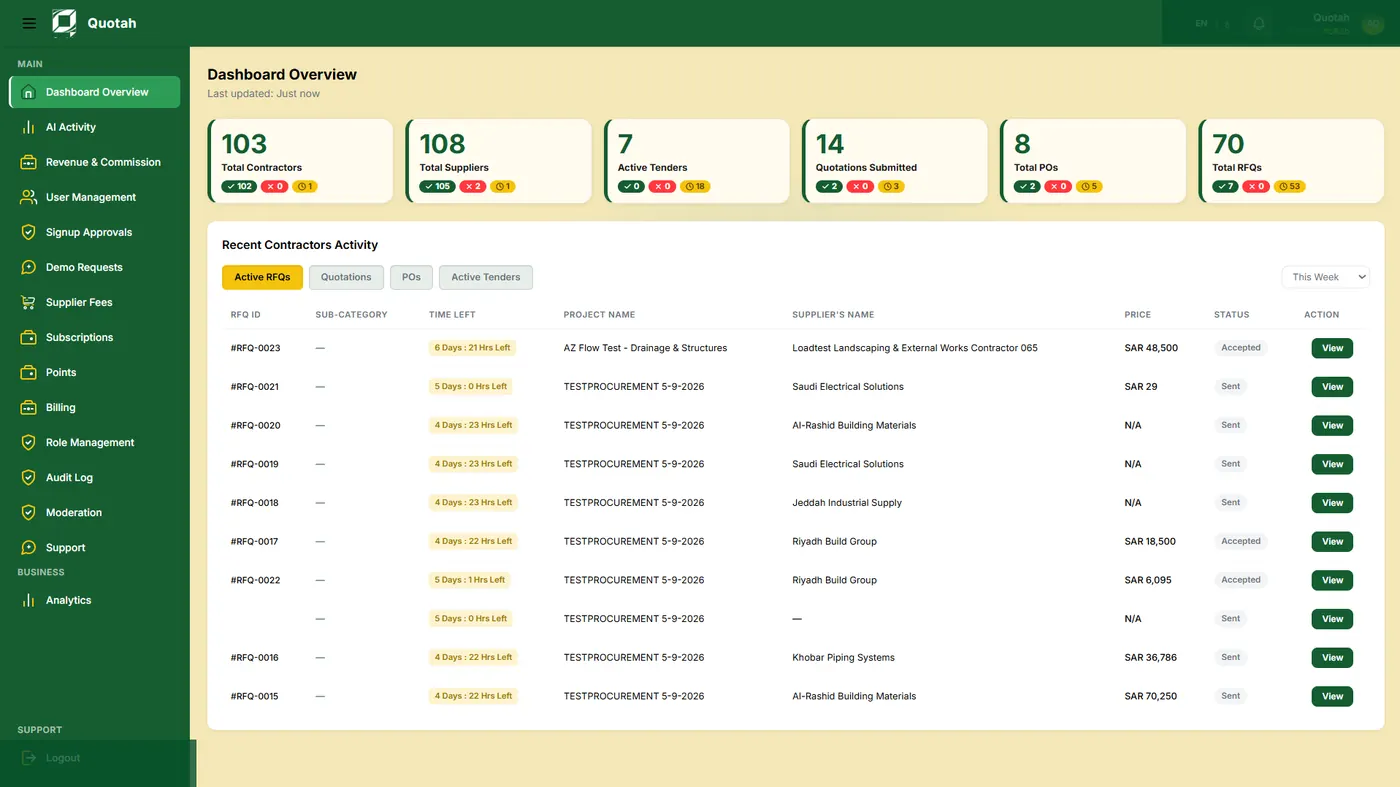
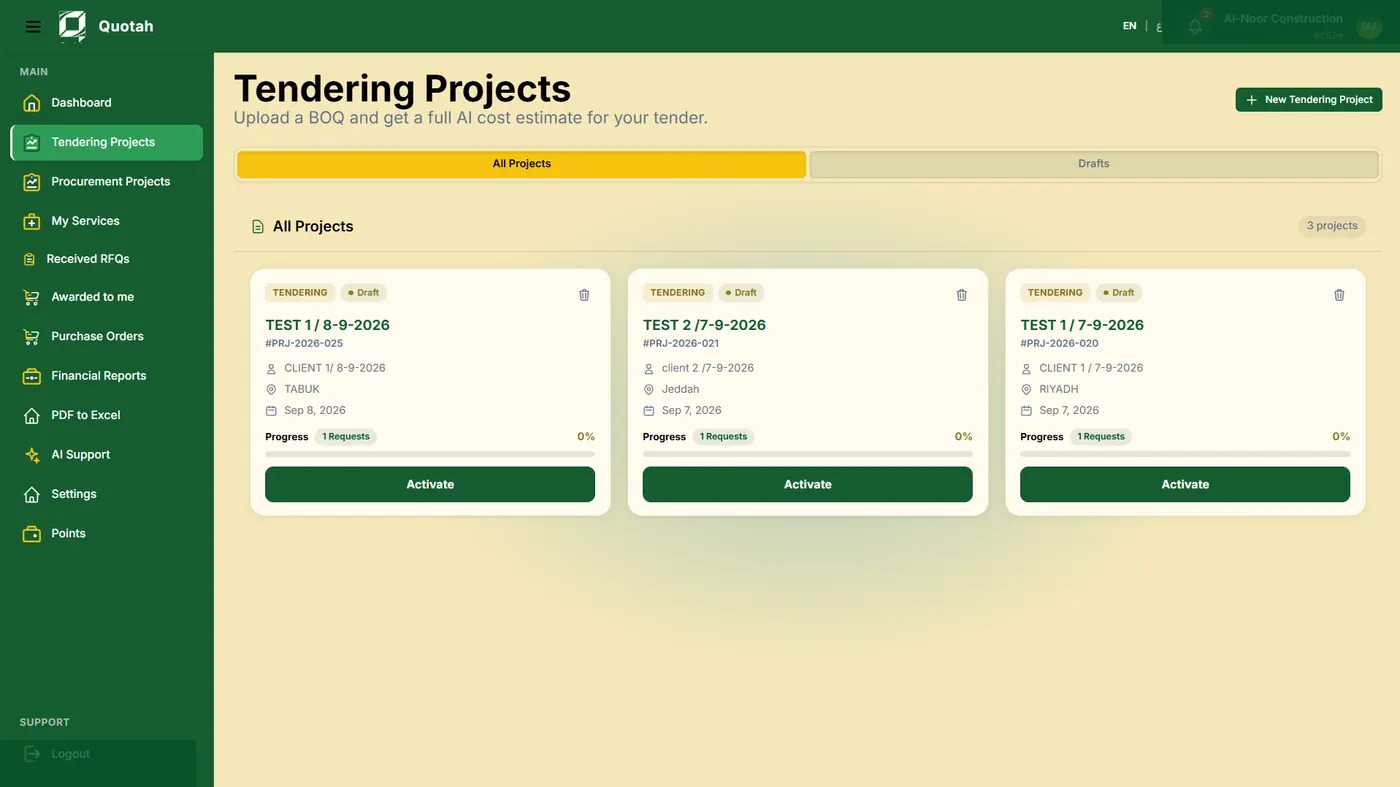
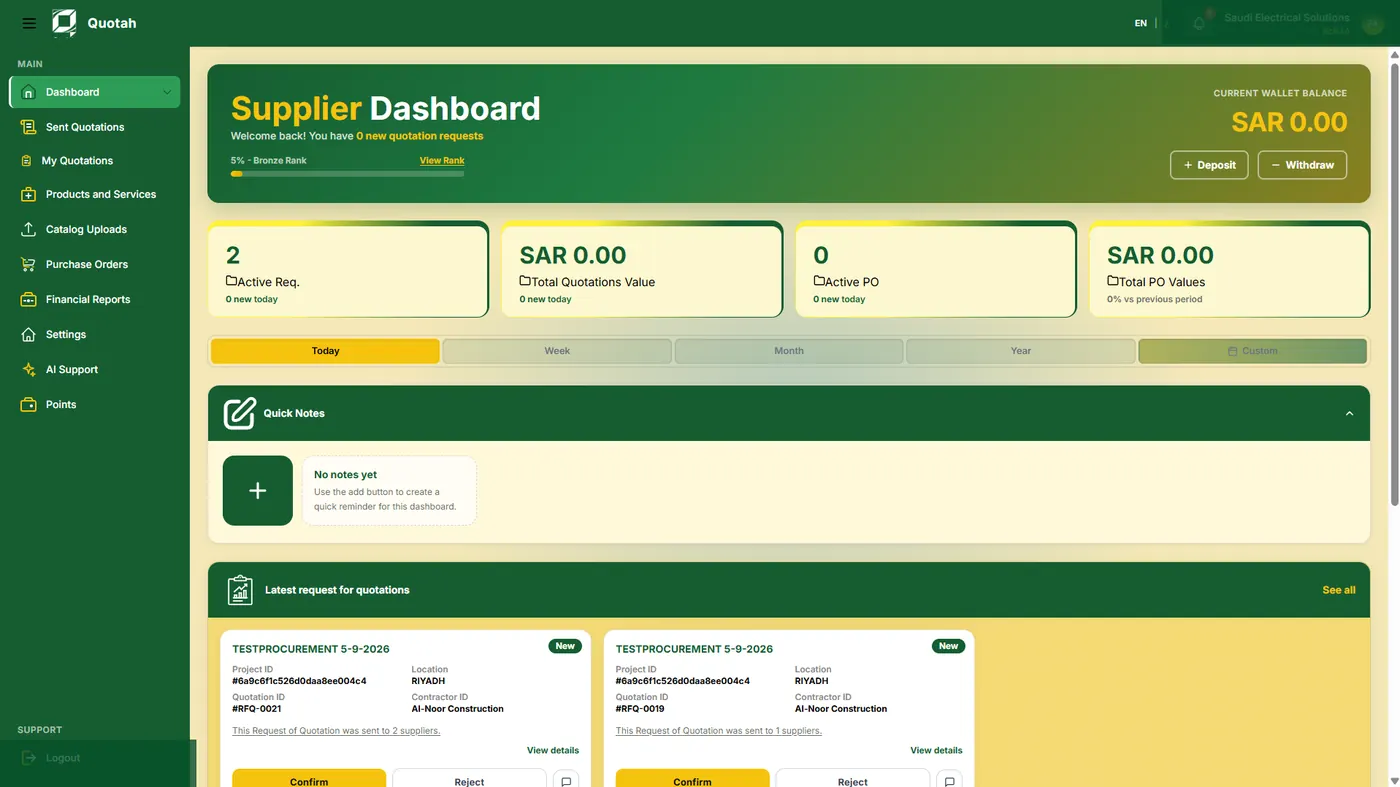
Start with a clearer study, connect the people involved, and keep each decision tied to the project.
Independent study focuses on structured inputs, reviewable analysis and editable preparation.
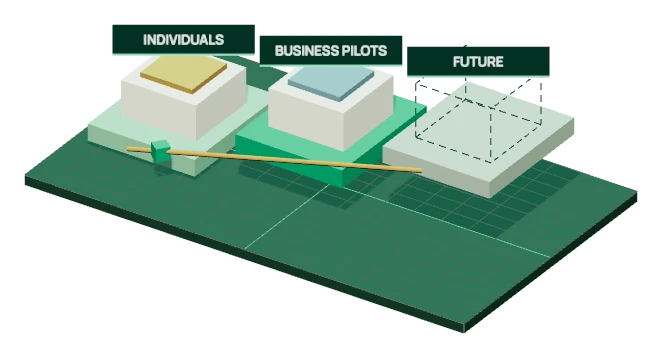
Interactive construction illustration.Consultant, owner and execution workspaces are future capabilities, not currently available services.
The problem is not only document volume. It is the loss of meaning between tendering, supplier communication, quotation review, and procurement execution.
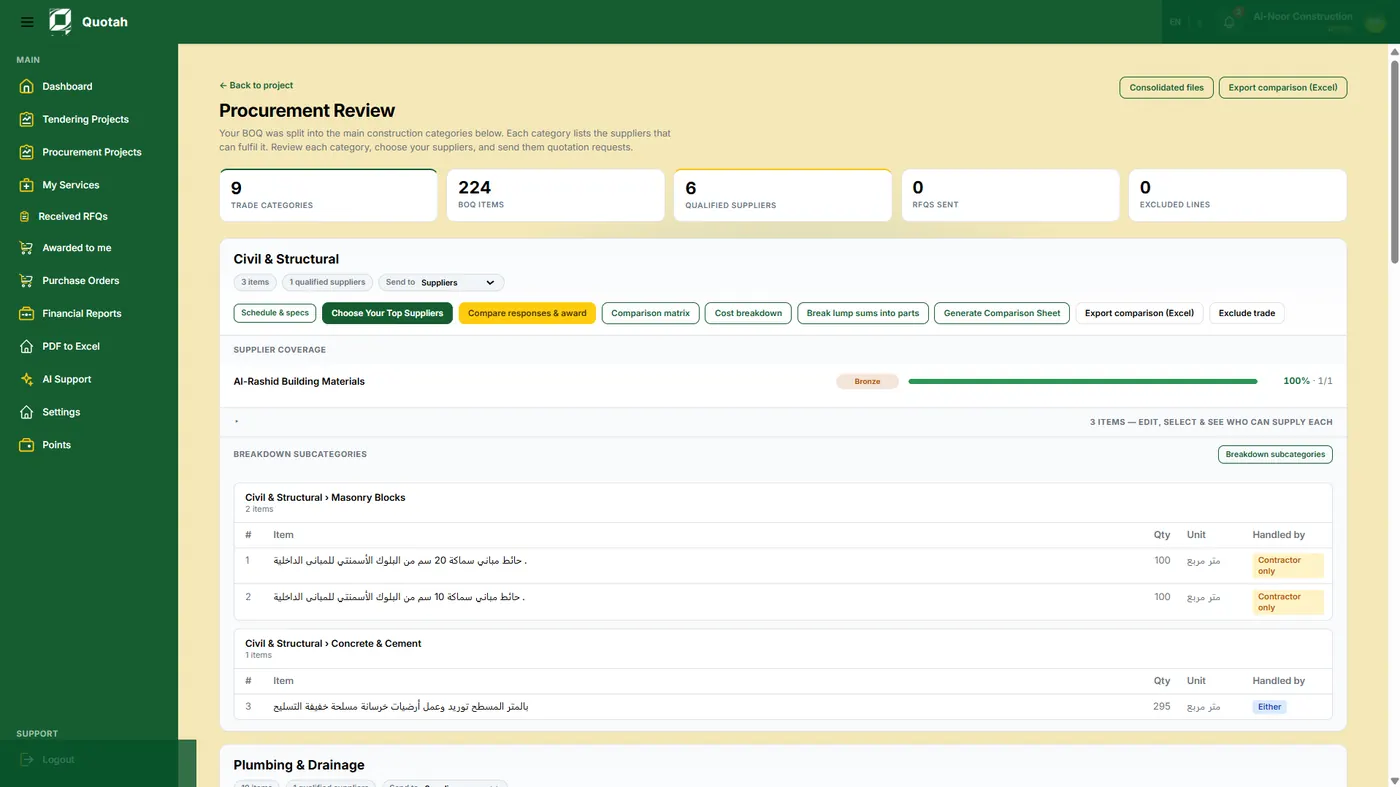
Teams interpret repeated rows, quantities, productivity, material logic, wastage, collateral work, and risk under time pressure.
Tendering, procurement, supplier follow-up, and management review often run in separate files and conversations.
Approved assumptions, risk notes, scope clarifications, and comparison logic can disappear before procurement action.
Supplier readiness, subcontractor capability, pricing behavior, and response quality are rarely structured into reusable knowledge.
Independent professionals, contractors, and suppliers each need different tools. Quotah brings those needs together through a shared understanding of the project.
The shared layer is intelligence: project context, BOQ logic, RFQ preparation, supplier and subcontractor readiness, quotation comparison, and reviewable decision records.
Clear information, practical workflows, and accountable decisions guide how we build Quotah.
BOQ rows, RFQs, quotations, supplier records, and decisions are organized so they can be reviewed and reused.
Repetitive preparation is reduced while the logic behind each recommendation remains visible.
See assumptions, confidence, information gaps, and risk notes alongside the analysis.
Quotah supports engineers and procurement teams. It does not replace approval responsibility.
Project, supplier, and commercial information must be handled with disciplined boundaries and clear purpose.
Use clear access permissions and review records to manage project information responsibly.
Quotah is designed around Saudi contracting language, procurement behavior, supplier coverage, and the practical reality of project study before purchasing.
Cost studies consider location, specifications, quantities, and the available evidence. Riyadh-based references and regional adjustments provide context where supported by the data.
Construction knowledge, engineering, commercial discipline, and technology shape how Quotah is built.

Keeps the experience focused on the decisions and daily tasks that matter to construction professionals.
Guides BOQ interpretation, project study logic, risk framing, productivity, material, wastage, and tender report quality.
Shapes RFQ preparation, supplier and subcontractor matching, quotation comparison, response workflows, and PO readiness.
Connects construction-specific analysis with usable workspaces, clear information, and appropriate access controls.
Brings pricing, scope, quotation terms, and risk into the same conversation before a purchasing decision.
Helps teams understand their workspace, get started, and share feedback that improves everyday use.
We focus on practical improvements that help you understand a project, compare options, and move forward with confidence.
Bring the scope, quantities, and cost drivers together before preparing your tender.
Review the documents, assumptions, and risk notes behind each recommendation.
Keep tendering, procurement, supplier, and subcontractor conversations tied to the same requirements.
Retain your team's approved comparisons and decision notes for future project work.

Our longer-term vision connects project study with consultant review, owner visibility, execution, mobile assistance, and integrations. These illustrations show planned capabilities, not currently available services.